01
tSZ cluster confirmation
Working out which cluster candidates picked up via the thermal Sunyaev-Zel'dovich effect are real, and which are noise, using machine learning.
PhD Student, Cavendish Laboratory, University of Cambridge
I'm a PhD student at the University of Cambridge, working on cosmology from the cosmic microwave background and the large-scale structure it traces. Day to day, that splits into two things: confirming galaxy clusters picked up via the thermal Sunyaev-Zel'dovich effect using machine learning, and building agentic AI systems that can carry out pieces of that research themselves, writing the code, running the analysis, and interpreting what comes out. Both come together at the Infosys-Cambridge AI Centre, where I'm also based.
About me
I'm based at the Cavendish Laboratory, University of Cambridge, where I work on cosmology, mostly pulling cosmological information out of galaxy clusters and the cosmic microwave background. I'm also affiliated with the Kavli Institute for Cosmology and the Infosys-Cambridge AI Centre.
At the moment I'm working on confirming clusters detected via the thermal Sunyaev-Zel'dovich (tSZ) effect, using machine learning. tSZ surveys throw up a lot of candidates, but not all of them turn out to be real clusters, so getting that confirmation step right matters if the resulting catalogue is going to be much use for cosmology. I'm supervised by Boris Bolliet.
Alongside that, I work on agentic AI for scientific discovery in cosmology: systems like CMBAgent that can plan an analysis, write the code, run it, and interpret the results, more like a research collaborator than a script you run once. I'm interested in how far that kind of agent-driven approach can go, and what it means for the way cosmology gets done.
This all started with my MPhil dissertation in Data Intensive Science at Cambridge, where I looked at parameter inference using diffusion models. It's stuck with me since, in how I think about using machine learning for cosmology.
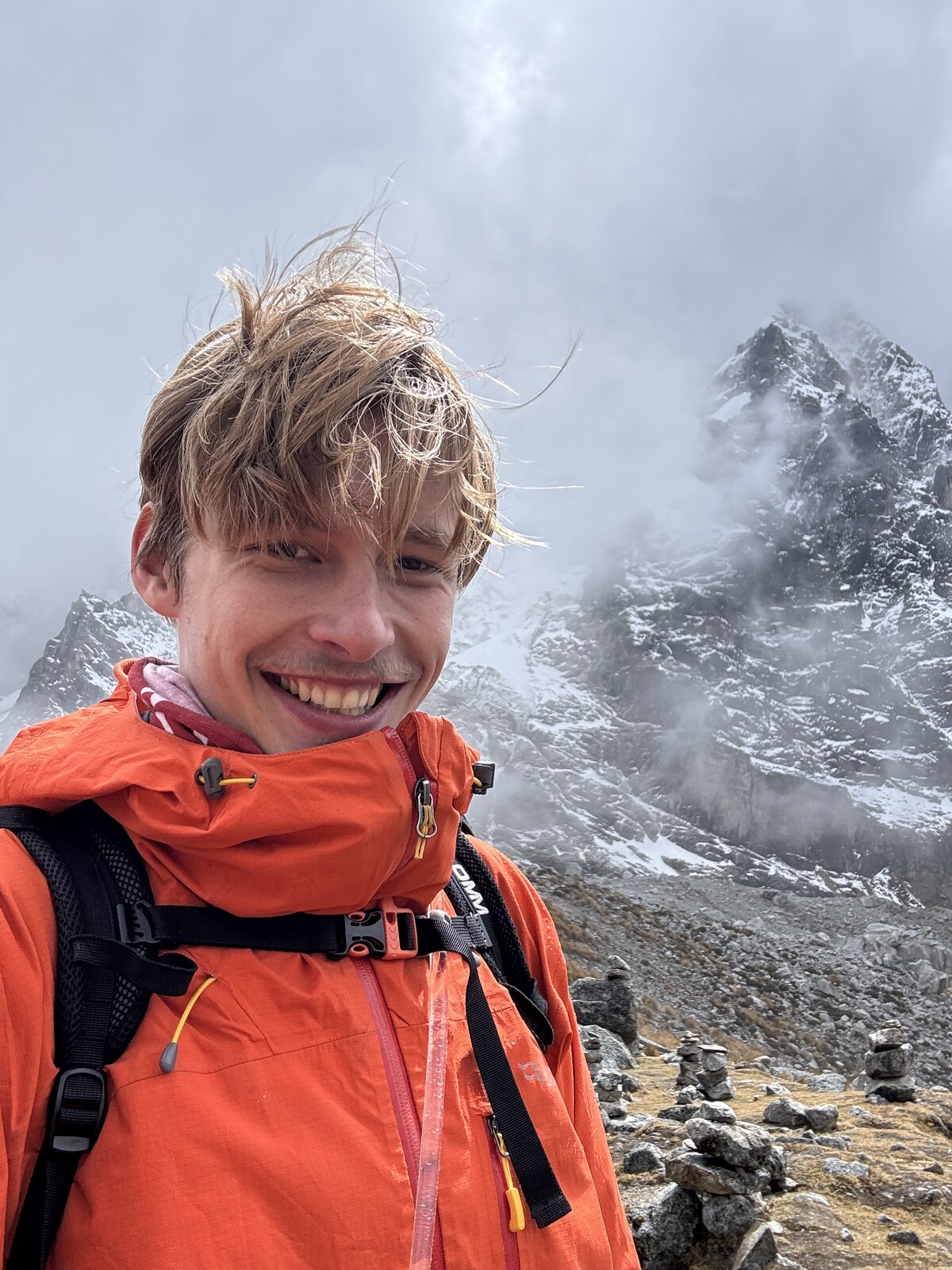
Outside research, I enjoy sport and can often be found rowing on the River Cam. I also love being outdoors, whether that's hiking a new trail or exploring a city I haven't visited before, so my weekends and holidays tend to be spent outside wherever possible.
What I study
01
Working out which cluster candidates picked up via the thermal Sunyaev-Zel'dovich effect are real, and which are noise, using machine learning.
02
Pulling cosmological constraints out of CMB data, including secondary effects like the thermal Sunyaev-Zel'dovich signal.
03
Building agentic tools, like CMBAgent, that can write code and run pipelines alongside a human scientist.
My work
2026
An agent-driven approach to cosmological parameter inference using CMBAgent, showing that a semi-autonomous AI workflow can hold its own against expert-designed solutions in a real scientific challenge.
Where I am
Primary
PhD Student, University of Cambridge
Associated institute
Research links across cosmology, inference, and computational methods.
Research centre
Applying machine learning, including agentic AI systems, to cosmology and to scientific discovery more widely.
Collaboration
Member of the Simons Observatory collaboration.
Supervisor
My PhD supervisor is Boris Bolliet.
How I got here
2025-Current
PhD Student, Cavendish Laboratory, University of Cambridge
2024 to 2025
University of Cambridge
2021 to 2024
University of Cambridge, with Part II Astrophysics
Find me online
Academic & research
Code & professional
Personal
What I am up to
Current
Working on cluster confirmation for tSZ-detected galaxy clusters using machine learning, alongside ongoing work on agentic AI systems for cosmology.
April 2026
New arXiv paper: Competing with AI Scientists: Agent-Driven Approach to Astrophysics Research.
December 2025
Part of the KICC team awarded first place in Phase 1 of the NeurIPS 2025 FAIR Universe Weak Lensing Uncertainty Challenge.
Away from the desk
Outside of work, I'm drawn to new places: a hiking trail, a city I've never visited, or any excuse for a trip away. Closer to home, rowing and fencing keep me just as busy.